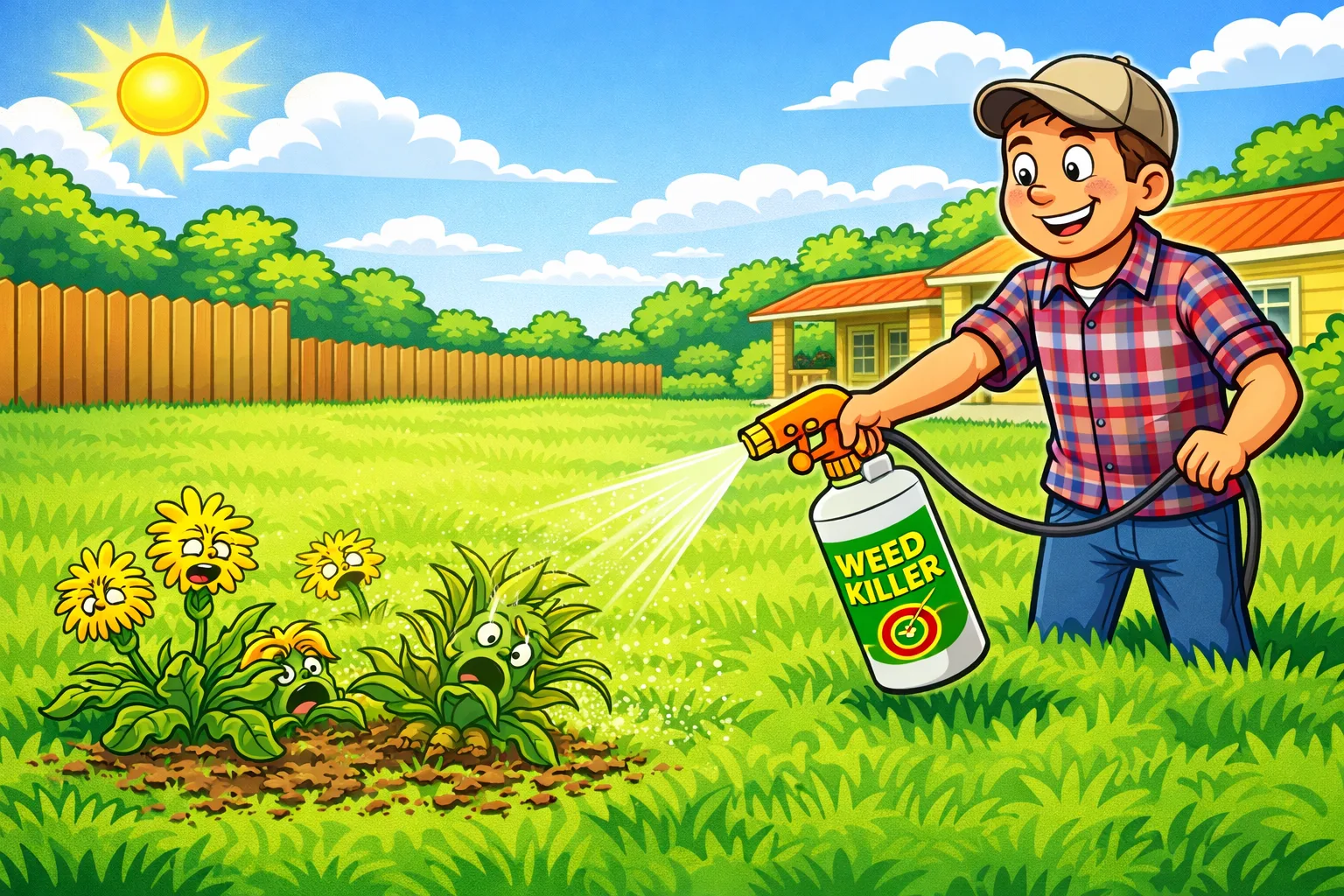
Choosing the best weed killer for bermuda grass is one of the most common questions we get from homeowners here in Valdosta and across South Georgia. Bermuda grass is tough, aggressive, and heat-loving, which makes it the ideal turf for our climate. But that same warm, humid environment that bermuda thrives in also creates perfect conditions for weeds. From crabgrass and dallisgrass to dollarweed and clover, the competition for your lawn never takes a break.
The good news is that bermuda grass tolerates a wider range of herbicides than most other turf types. That gives you more options for weed control, but it also means you need to know which products to use, when to apply them, and which ones to avoid. Get it right and your bermuda stays thick and weed-free. Get it wrong and you can thin out your turf or waste money on products that do not work in our conditions.
This guide covers everything you need to know about selecting and applying weed killers on bermuda grass lawns in South Georgia, from pre-emergent barriers that stop weeds before they sprout to post-emergent herbicides that eliminate the ones already growing in your yard.
Understanding Weeds in Bermuda Grass Lawns
Before you reach for a bottle of herbicide, it helps to understand what you are dealing with. Weeds in bermuda grass lawns fall into two main categories: broadleaf weeds and grassy weeds. Each type requires a different approach.
Broadleaf weeds include clover, dandelions, dollarweed (pennywort), chickweed, henbit, and spurge. These are generally the easier group to control because their leaf structure and biology differ significantly from grass, which means selective herbicides can target them without harming your bermuda.
Grassy weeds include crabgrass, dallisgrass, goosegrass, annual bluegrass (Poa annua), and nutsedge (technically a sedge, not a grass, but grouped here because it looks like one). These are harder to kill selectively because they share similar biology with your bermuda turf. Killing a grassy weed without hurting the surrounding bermuda requires more specialized products and careful timing.
Here in South Georgia, our long growing season means weeds have more time to germinate and establish than in cooler climates. Soil temperatures stay warm enough for weed germination from late February through November, which is why a single herbicide application is rarely enough. Effective weed control in bermuda grass requires a year-round program that combines both pre-emergent and post-emergent treatments.
Pre-Emergent Weed Killers for Bermuda Grass
Pre-emergent herbicides are the foundation of any serious weed control program. They work by creating a chemical barrier in the top layer of soil that prevents weed seeds from successfully germinating. The key word is "pre" -- these products must be applied before weeds emerge. Once you can see the weed, a pre-emergent will not help.
For bermuda grass lawns in South Georgia, the best pre-emergent active ingredients are:
- Prodiamine (Barricade). This is the gold standard pre-emergent for bermuda grass. Prodiamine provides the longest residual control of any pre-emergent herbicide, lasting 4 to 6 months depending on application rate and soil conditions. It controls crabgrass, goosegrass, annual bluegrass, and many broadleaf weeds. It is safe for bermuda grass at labeled rates and is the product we rely on most in our professional weed control programs.
- Dithiopyr (Dimension). Dithiopyr is unique among pre-emergents because it also provides early post-emergent control of crabgrass. If crabgrass has already germinated but is still in the 1- to 2-leaf stage, Dimension can still kill it. This makes it a good option if you missed your ideal pre-emergent window by a week or two. It is safe for established bermuda and provides 3 to 4 months of residual control.
- Pendimethalin (Pendulum, Pre-M). Pendimethalin is an effective and affordable pre-emergent that controls a broad spectrum of grassy and broadleaf weeds. It has a shorter residual than prodiamine, typically lasting 2 to 3 months, so it may require a second application during the season. It is safe for bermuda grass but can temporarily stain concrete and hardscapes yellow, so avoid application near driveways and walkways.
When to apply pre-emergent in South Georgia: Timing is critical. For spring weeds like crabgrass and goosegrass, apply your first pre-emergent when soil temperatures at a 4-inch depth reach 55 degrees Fahrenheit for 3 to 5 consecutive days. In the Valdosta area, this typically happens in mid-to-late February. For fall weeds like annual bluegrass and henbit, apply a second round of pre-emergent in mid-September to early October.
After application, water the pre-emergent in with at least half an inch of irrigation or rainfall within 14 days. The product needs to reach the soil to form its barrier. If it sits on top of the grass blades without being watered in, it breaks down from UV exposure and loses effectiveness.
Best Post-Emergent Weed Killers for Bermuda Grass
Post-emergent herbicides kill weeds that are already actively growing. Even with a solid pre-emergent program, some weeds will break through. Post-emergents are your second line of defense, and selecting the right one depends on whether you are targeting broadleaf weeds or grassy weeds.
Post-emergent herbicides come in two forms:
- Selective herbicides kill specific types of plants (usually broadleaf weeds) while leaving grass unharmed. These are what you want for treating weeds in an established bermuda lawn.
- Non-selective herbicides (like glyphosate/Roundup) kill everything they contact, including your bermuda grass. These should only be used for spot treatments in cracks, beds, or areas where you do not mind killing the turf.
Broadleaf Weed Killers Safe for Bermuda
Broadleaf weeds are the most straightforward to control in bermuda grass because selective broadleaf herbicides are highly effective and bermuda tolerates them well. The best active ingredients for broadleaf weed control in bermuda include:
- 2,4-D. One of the oldest and most widely used broadleaf herbicides, 2,4-D is effective against dandelions, clover, plantain, and many other common broadleaf weeds. It is safe for bermuda grass and is a component of many consumer weed-and-feed products. For best results, apply when weeds are actively growing and temperatures are between 60 and 85 degrees Fahrenheit.
- Dicamba. Often combined with 2,4-D in commercial products, dicamba adds control of harder-to-kill broadleaf weeds like dollarweed, ground ivy, and wild violets. It is safe for bermuda at labeled rates but can cause damage if it drifts onto ornamental plants or garden beds. Apply on calm days with no wind.
- Triclopyr. This is the go-to active ingredient for stubborn broadleaf weeds and woody plants that resist 2,4-D. Triclopyr is particularly effective on dollarweed, which is extremely common in South Georgia's moist, poorly drained areas. It is safe for bermuda grass but should not be used on St. Augustine or centipede grass.
- Three-way herbicide blends (Trimec, Weed B Gon, etc.). Products that combine 2,4-D, dicamba, and mecoprop (MCPP) or triclopyr provide the broadest spectrum of broadleaf weed control. These blends are safe for bermuda and effective against the widest range of broadleaf species you will encounter in a South Georgia lawn.
How to Kill Grassy Weeds in Bermuda
Grassy weeds like crabgrass, dallisgrass, and goosegrass are the most challenging weeds to control in bermuda because they are biologically similar to your turf. Killing a grass weed without harming the surrounding bermuda requires specialized herbicides. Here are the best options:
- Celsius WG (thiencarbazone + iodosulfuron + dicamba). Celsius is one of the best post-emergent herbicides available for bermuda grass. It controls a very wide spectrum of both broadleaf and grassy weeds, including crabgrass, goosegrass, dallisgrass, nutsedge, doveweed, and dozens of broadleaf species. Bermuda grass has excellent tolerance to Celsius, even in summer heat. This is a professional-grade product and one of the primary tools we use in our weed control programs at Elite Landscapes.
- Certainty (sulfosulfuron). Certainty is highly effective on nutsedge (both yellow and purple), dallisgrass, and several other tough grassy and sedge weeds. It provides both contact kill and root uptake, giving longer-lasting control than many other post-emergent options. It is safe for bermuda grass and works well in combination with Celsius for broad-spectrum control.
- Quinclorac (Drive XLR8). Quinclorac is one of the most effective active ingredients for crabgrass control in bermuda grass. It provides post-emergent kill of crabgrass at multiple growth stages, from seedling to mature plants. It also controls some broadleaf weeds including white clover and dollarweed. Safe for bermuda and can be tank-mixed with broadleaf herbicides for one-pass weed control.
- Sethoxydim (Segment, Vantage). This is a selective grassy weed killer that targets annual and perennial grassy weeds while being safe for bermuda. It is particularly effective on goosegrass and can help with certain other grassy weeds that resist other treatments.
A note on MSMA: MSMA (monosodium methanearsonate) was once the go-to product for grassy weed control in bermuda. The EPA restricted MSMA use to sod farms and golf courses in 2013, making it unavailable for residential lawn use. Celsius and Certainty have largely filled the gap that MSMA left in the residential market, and in many cases they provide better overall weed control with less risk of turf injury.
When to Apply Weed Killer in South Georgia
Timing your herbicide applications correctly is just as important as choosing the right product. Here is a general schedule for bermuda grass weed control in the Valdosta area:
- Mid-February to early March: Apply spring pre-emergent (prodiamine or dithiopyr) before soil temps hit 55 degrees consistently. This is your most important application of the year. Missing this window means crabgrass and goosegrass will germinate unchecked.
- April to May: Apply post-emergent herbicides for any broadleaf or grassy weeds that broke through the pre-emergent barrier. Bermuda is fully out of dormancy and actively growing, which means it recovers quickly from any minor herbicide stress. This is the ideal window for Celsius, Certainty, or broadleaf three-way products.
- June to August: Spot-treat weeds as needed. Avoid broadcast applications of herbicides when temperatures consistently exceed 90 degrees, as heat stress combined with herbicide stress can thin bermuda turf. Celsius is one of the few post-emergent products rated for use at high temperatures on bermuda.
- Mid-September to early October: Apply fall pre-emergent to prevent winter annual weeds like annual bluegrass, henbit, and chickweed. This second pre-emergent application is often overlooked but makes a significant difference in the appearance of your lawn during late fall and winter.
- November to January: Bermuda is dormant. Do not apply herbicides during dormancy. If you see winter weeds like annual bluegrass growing in dormant bermuda, you can spot-treat with a post-emergent, but a properly timed fall pre-emergent should have prevented them.
Common Mistakes When Using Weed Killer on Bermuda Grass
Even with the right products, poor application practices can lead to disappointing results or turf damage. Avoid these common mistakes:
- Mowing too soon after application. Do not mow for at least 2 days before and 2 days after applying post-emergent herbicides. The weed needs enough leaf surface to absorb the product, and mowing removes that surface area. For pre-emergents, avoid dethatching or aerating after application, as this disrupts the chemical barrier in the soil.
- Applying to stressed turf. If your bermuda is drought-stressed, heat-stressed, or recovering from disease, skip the herbicide application. Stressed grass is more susceptible to herbicide injury. Water your lawn well for several days before applying any post-emergent product.
- Using the wrong product for your weed. A broadleaf herbicide will not kill crabgrass. A grassy weed killer will not eliminate clover. Identify the weed first, then choose the appropriate herbicide. If you are unsure what weed you are dealing with, take a photo and bring it to your local UGA Extension office or send it to a lawn care professional for identification.
- Applying pre-emergent too late. If crabgrass is already visible, a pre-emergent will not help. You have missed the window and need a post-emergent approach instead. Many homeowners waste money applying pre-emergent in April after crabgrass has already germinated.
- Over-applying herbicides. More is not better. Exceeding the labeled rate does not kill weeds faster; it increases the risk of damaging your bermuda and can create environmental problems. Always measure your lawn area accurately and calibrate your sprayer or spreader before applying.
Frequently Asked Questions
Will weed killer hurt bermuda grass?
Selective herbicides labeled for use on bermuda grass will not hurt your lawn when applied at the correct rate and timing. Bermuda grass is one of the most herbicide-tolerant turf types, which is one of the reasons it is so popular in South Georgia. Products containing 2,4-D, dicamba, triclopyr, prodiamine, Celsius, Certainty, and quinclorac are all safe for bermuda at labeled rates. The main risk of turf injury comes from over-application, applying during extreme heat stress, or using a non-selective herbicide like glyphosate, which kills all vegetation on contact.
When is the best time to spray bermuda grass for weeds?
The best time to spray bermuda grass for weeds depends on the type of herbicide. For pre-emergent herbicides, apply in mid-February (before soil temps reach 55 degrees) and again in mid-September for fall weeds. For post-emergent herbicides, the ideal window is April through May when bermuda is actively growing, weeds are young and actively growing, and temperatures are between 60 and 85 degrees. Avoid spraying post-emergents during peak summer heat above 90 degrees unless the product is specifically rated for high-temperature use.
Can I use Roundup on bermuda grass?
No, you should not spray Roundup (glyphosate) on bermuda grass unless you want to kill the bermuda along with the weeds. Roundup is a non-selective herbicide, meaning it kills all plants it contacts, including bermuda grass. If you need to kill a weed in the middle of your bermuda lawn, use a selective herbicide instead. The only situation where Roundup is appropriate near bermuda is for treating weeds in landscape beds, cracks in hardscaping, or areas where bermuda is not growing. Even then, be careful with drift and overspray, as glyphosate can damage bermuda it contacts.
How long after weed killer can I mow?
Wait at least 48 hours after applying post-emergent weed killer before mowing. This gives the herbicide time to be absorbed through the weed's leaves and translocated to the roots. Mowing too soon removes the treated leaf tissue before the product has been fully absorbed, reducing the effectiveness of the application. For pre-emergent herbicides, you can mow at your normal schedule, but avoid dethatching, aerating, or scalping the lawn for at least 4 weeks after application to keep the chemical barrier intact in the soil.