South Georgia's warm, humid climate creates the perfect growing conditions for lush lawns, but it also makes Valdosta a paradise for destructive insects. Unlike garden pests that target flowers and vegetables, lawn pests attack the grass itself, feeding on blades, stems, and roots until entire sections of turf are dead. Because the damage often mimics drought stress or disease, many homeowners don't realize they have a pest infestation until significant harm has already been done. Early identification is the single most important factor in protecting your lawn from these common bugs in Georgia.
Armyworms: Valdosta's #1 Lawn Threat
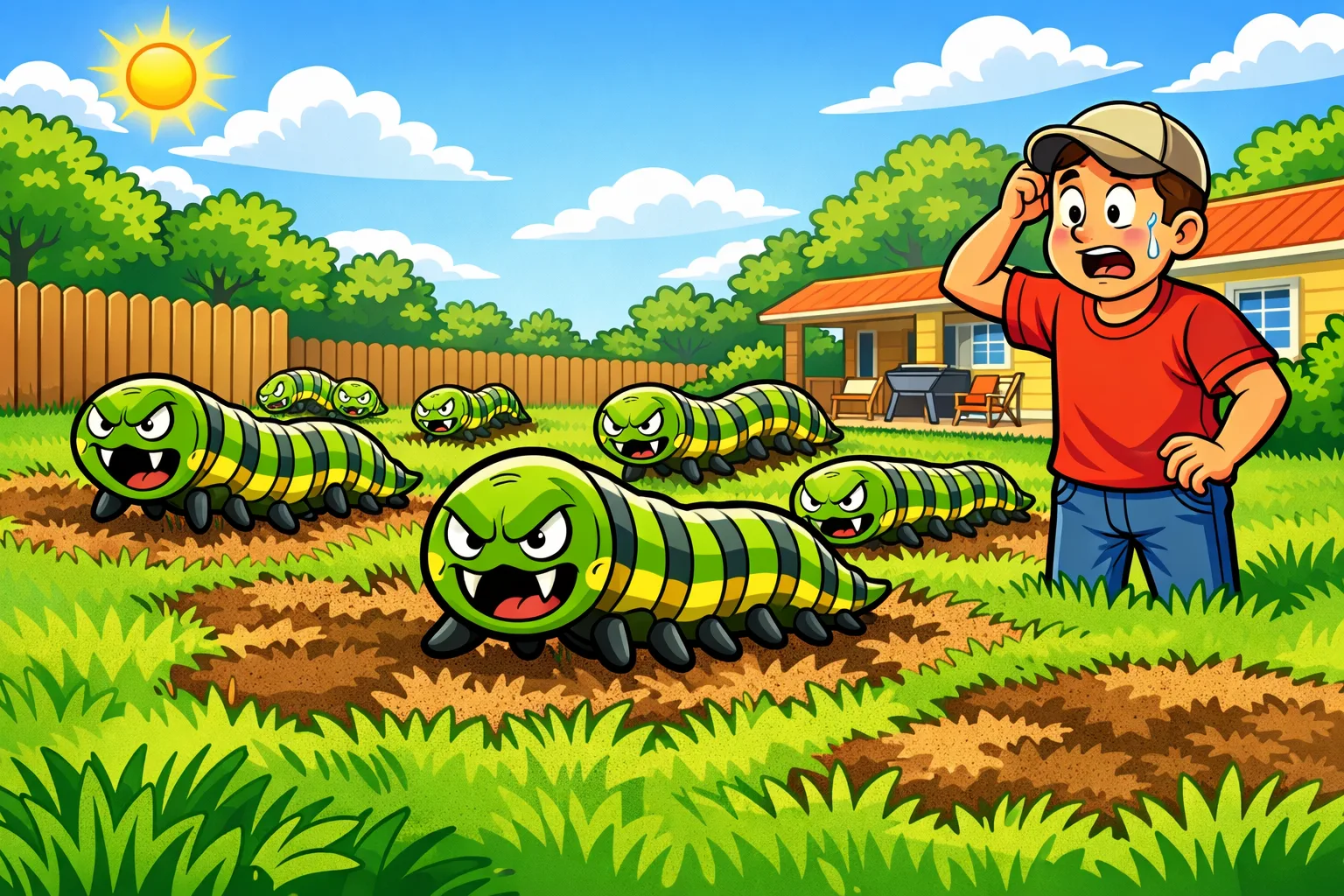
Fall armyworms are the most devastating lawn pest in Valdosta and across South Georgia. These caterpillars are the larvae of a small, gray-brown moth that migrates northward from tropical regions each year. Adult moths lay egg masses on grass blades, and once hatched, the larvae begin feeding immediately.
Armyworm caterpillars are about one to one-and-a-half inches long, with green, brown, or dark gray bodies and a distinctive inverted Y-shaped marking on their heads. They feed primarily in the early morning and late evening, which is why many homeowners miss them entirely.
The damage is unmistakable once it starts. Brown patches appear suddenly and spread rapidly, sometimes consuming an entire lawn in just two to three days. Armyworms move in large groups across a lawn like an advancing army, which is how they got their name. The destruction typically occurs from late August through October in the Valdosta area, with September being the peak month.
To check for armyworms, try the soap flush test. Mix two tablespoons of dish soap in a gallon of water and pour it over a two-square-foot area of your lawn near the edge of the damaged zone. Within a few minutes, armyworms will rise to the surface. If you count more than three per square foot, treatment is needed immediately. Bifenthrin and permethrin-based insecticides are effective, but timing is critical. Treat in the late afternoon so the product is active when the caterpillars come out to feed.
Chinch Bugs in St. Augustine Grass
If you have St. Augustine grass in Valdosta, chinch bugs are a pest you need to watch carefully. These tiny insects, only about one-sixth of an inch long, have black bodies with white wings folded across their backs. They feed by piercing grass blades with their mouthparts and sucking out the plant juices while simultaneously injecting a toxin that blocks the grass from absorbing water.
Chinch bug damage looks almost identical to drought stress, which makes it particularly deceptive. Yellowing patches typically start along the edges of your lawn near driveways, sidewalks, and building foundations where reflected heat creates the warm, dry conditions chinch bugs prefer. As the infestation spreads, the yellow areas turn brown and die. Unlike drought damage, watering does not help because the grass has been chemically damaged by the insect's toxin.
In South Georgia, chinch bugs are most active from June through September, though mild winters can allow populations to build earlier. To confirm an infestation, press a coffee can with both ends removed into the soil at the edge of a damaged area. Fill it with water and wait five minutes. Chinch bugs will float to the surface.
Treatment includes granular or liquid insecticides containing bifenthrin, imidacloprid, or trichlorfon. Because chinch bugs thrive in thick thatch layers, dethatching your St. Augustine lawn regularly is one of the best preventive measures you can take.
Grub Worms: The Hidden Destroyers
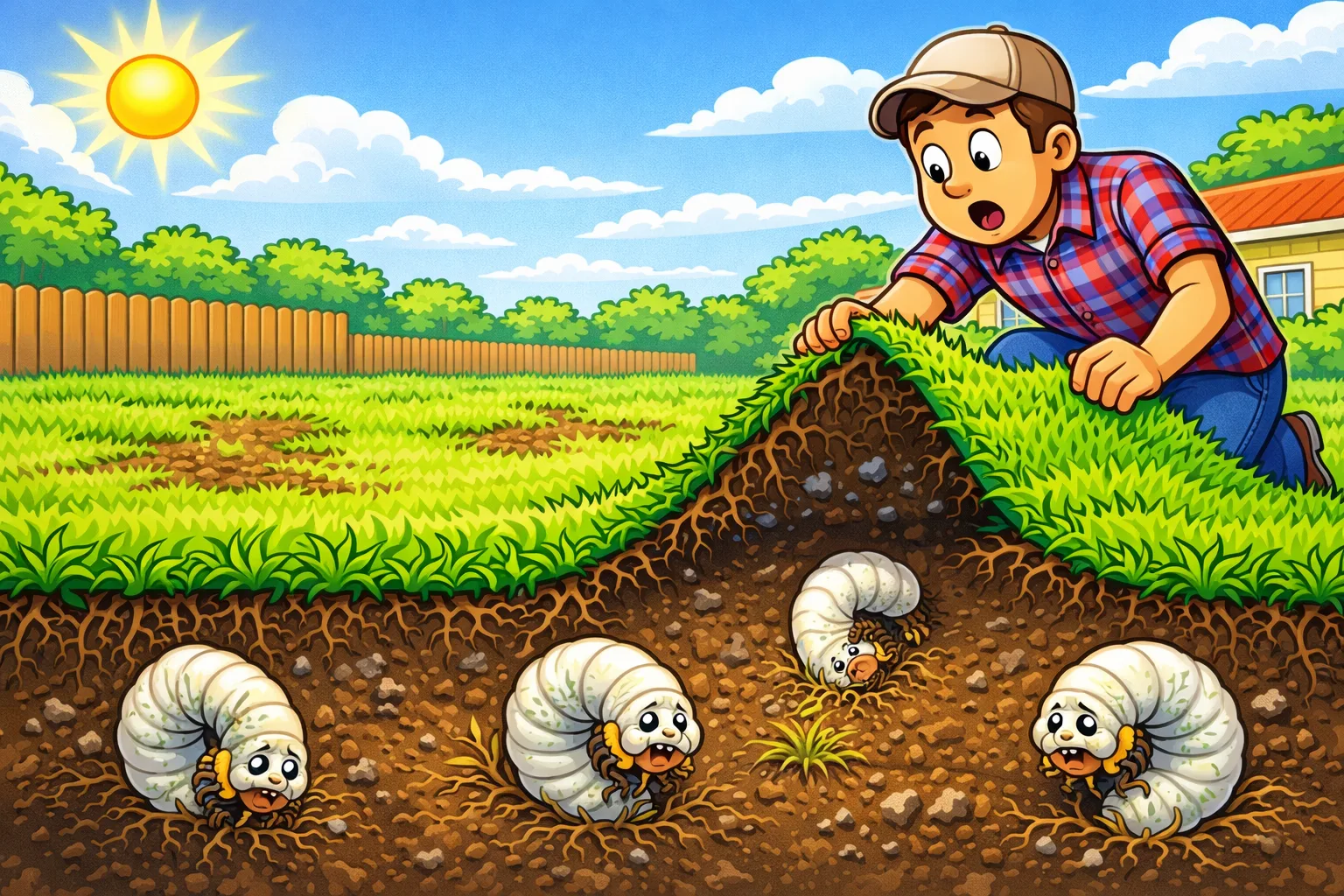
Grub worms are among the most frustrating lawn pests in Georgia because they do their damage underground where you cannot see it. These white, C-shaped larvae are the immature stage of several beetle species, including Japanese beetles and June bugs. They live in the top two to three inches of soil and feed on grass roots, severing the connection between the turf and its source of water and nutrients.
The first sign of a grub problem is usually irregular patches of grass that look wilted or drought-stressed despite adequate watering. The defining test is simple: grab a handful of the affected turf and pull. If it lifts up easily like a piece of carpet with no roots holding it down, you almost certainly have grubs. You may also notice increased activity from birds, armadillos, or raccoons digging in your lawn. These animals are feeding on the grubs below the surface.
To confirm, cut a one-square-foot section of sod about three inches deep and peel it back. If you find more than five grubs in that area, treatment is warranted. The best time to treat for grubs in Valdosta is late summer through early fall, when the larvae are small and feeding near the surface. Products containing imidacloprid or chlorantraniliprole work well as preventive treatments applied in June or July. For active infestations, trichlorfon or carbaryl provide faster knockdown.
Fire Ants in South Georgia Lawns
Fire ants are a fact of life in Valdosta. These aggressive, reddish-brown insects build large mounds in lawns, garden beds, and along sidewalks. A single colony can contain over 200,000 workers, and a typical residential property in South Georgia may have dozens of active mounds.
Beyond the well-known danger of their painful stings, which are particularly hazardous for children, pets, and individuals with allergies, fire ants cause real damage to your lawn and property. Their mounds smother grass and create permanent bare spots. Large colonies can damage irrigation system wiring, valve boxes, and electrical components. The mounds also make mowing dangerous and uneven.
There are three main approaches to fire ant control. Mound treatments, using liquid drenches or granular products applied directly to individual mounds, provide fast results but only address the mounds you can see. Broadcast bait treatments spread a slow-acting bait across the entire lawn that worker ants carry back to the colony, eventually killing the queen. This method takes longer but is far more effective at reducing overall populations. The most comprehensive approach combines both: a broadcast bait application followed by individual mound treatments for any surviving colonies two weeks later.
For long-term control, plan on treating your Valdosta property at least twice per year, once in spring and once in fall, when fire ants are most actively foraging.
Mole Crickets
Mole crickets are a common and destructive pest in Valdosta's sandy soils. These unusual insects, about one to two inches long with large, shovel-like front legs, spend most of their lives underground. They tunnel through the top few inches of soil, feeding on grass roots and organic matter while physically uprooting turf as they move.
The damage from mole crickets is distinctive. Affected areas feel spongy and soft underfoot, as if the ground has been loosened. You may notice raised, finger-width tunnels visible on the soil surface, especially after rain or irrigation. Over time, the grass thins out and dies in irregular patterns. Mole crickets are most active in Valdosta from late spring through fall, with the heaviest damage occurring in late summer when nymphs are large and feeding aggressively.
To confirm mole cricket activity, use the same soap flush test described for armyworms. Pour soapy water over a suspect area and watch for mole crickets to emerge within a few minutes. Treatment timing is important: products are most effective when applied in June or July, targeting young nymphs before they grow large enough to cause major damage. Bifenthrin and imidacloprid are both effective options for mole cricket control.
How to Prevent Lawn Pest Damage
The best defense against pest infestations in Valdosta is a healthy, well-maintained lawn. Stressed turf is far more vulnerable to insect damage than vigorous, properly cared-for grass. Here are the key prevention strategies:
- Mow at the correct height. Bermuda grass should be maintained at 1 to 1.5 inches, while St. Augustine grass performs best at 3.5 to 4 inches. Cutting too short weakens the turf and invites pest problems.
- Water deeply but infrequently. Most Valdosta lawns need about one inch of water per week. Frequent, shallow watering encourages shallow root systems and creates the moist conditions that many pests prefer.
- Manage thatch. A thick thatch layer provides shelter for chinch bugs, armyworms, and other pests. Dethatch or aerate annually to keep thatch below half an inch.
- Fertilize appropriately. Over-fertilizing with nitrogen produces lush, soft growth that attracts pests. Follow soil test recommendations for balanced nutrition.
- Encourage beneficial insects. Ground beetles, big-eyed bugs, and parasitic wasps all prey on common lawn pests. Avoid broad-spectrum insecticide applications that kill these natural allies along with the target pests.
- Inspect regularly. Walk your lawn weekly, especially during peak pest season from June through October. Check for unusual brown spots, thinning areas, spongy soil, or increased bird activity. Early detection prevents small problems from becoming expensive ones.
- Apply preventive treatments on schedule. For properties with recurring pest issues, preventive insecticide applications in late spring and mid-summer can stop infestations before they start.
When to Call a Professional
Some pest problems in Valdosta lawns can be managed with over-the-counter products and careful timing. However, there are situations where professional help is the smarter choice. If the damage is spreading rapidly and you cannot identify the pest, if you have treated an area but the problem returns within weeks, or if the infestation covers a large portion of your property, it is time to call in an expert.
Professional lawn care technicians have access to commercial-grade products, application equipment, and the diagnostic experience to identify exactly what is damaging your grass. They can also design a year-round treatment program that prevents pest problems rather than just reacting to them.
For species-specific identification and recommended treatment products, the UGA Extension's Turfgrass Pest Management page and the Managing Imported Fire Ants in Urban Areas guide are authoritative resources for Georgia homeowners.
Elite Landscapes offers comprehensive pest identification and treatment programs for residential and commercial properties throughout Valdosta and South Georgia. Whether you are dealing with an active armyworm invasion or want to set up a preventive program to protect your investment, our team can help. Contact us for a free lawn assessment.
Frequently Asked Questions
What is eating my grass in Valdosta, GA?
The most common lawn pests in Valdosta include fall armyworms, chinch bugs, grub worms, fire ants, and mole crickets. Armyworms and chinch bugs feed on grass blades, while grub worms eat roots below the surface. The specific pest depends on your grass type, the time of year, and the damage pattern you are seeing.
When do armyworms appear in South Georgia?
Fall armyworms typically appear in Valdosta and South Georgia from late August through October. They are most destructive in September and early October when populations peak. Armyworms can devastate an entire lawn in just two to three days, so early detection is critical.
How do I know if I have grub worms?
The telltale sign of grub worms is grass that looks drought-stressed but pulls up easily from the soil, almost like lifting a carpet. You may also notice increased activity from birds, armadillos, or raccoons digging in your lawn to feed on the grubs. To confirm, cut a one-square-foot section of sod and peel it back. If you find more than five white, C-shaped larvae, treatment is recommended.
Are fire ants harmful to my lawn?
Yes. Fire ant mounds smother grass and create bare spots in your lawn. Large colonies can also damage irrigation system components. Beyond lawn damage, fire ants pose a serious health risk to children, pets, and anyone allergic to their stings. A single mound can contain over 200,000 ants.
How much does lawn pest treatment cost?
Lawn pest treatment cost depends on your lawn size, pest type, and whether you need a one-time treatment or an ongoing preventive program. Contact Elite Landscapes for a free assessment of your specific situation — we'll identify what's in your lawn and recommend the right treatment.